
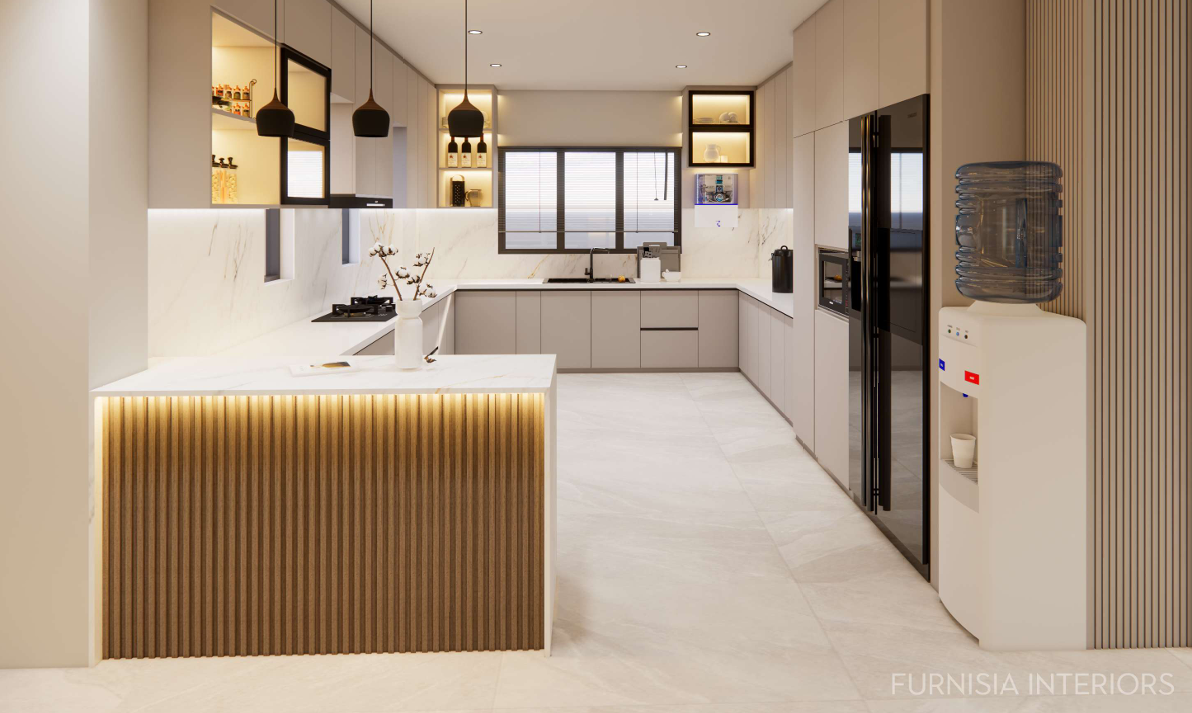
The kitchen is the heart of every home. It is where meals are prepared with care, where families gather, and where daily energy is created. In Nepal, Vastu Shastra—an ancient architectural science—plays an important role in designing homes that feel balanced, functional, and aligned with natural elements. Among all rooms, the kitchen holds special importance because it represents food, health, prosperity, and daily well-being.
Whether you’re building a new home, renovating your old house, or designing a modular kitchen, understanding kitchen vastu in Nepal can help you make better layout decisions. In this guide, we will explore practical directions, layouts, material choices, and modern adaptations so you can apply Vastu without compromising on today’s ergonomic or aesthetic needs.
What is Kitchen Vastu?
Kitchen Vastu refers to principles that guide where to place the kitchen and how to organize its components—such as the stove, sink, windows, storage, and electrical appliances. It combines architecture with natural elements (Agni—fire, Jal—water, Vayu—air, and Prithvi—earth). The goal is to create a space that is safe, practical, and comfortable for everyday use.
While Vastu is optional, many homeowners in Nepal prefer designs that align with these guidelines when planning interiors and construction. Whether you believe in Vastu fully or only use it as layout guidance, the principles often support common-sense design and safety. That is why kitchen vastu in nepal is widely followed.
1. Best Direction for Kitchen Vastu in Nepal
In Vastu, direction plays a key role. For kitchens in Nepal, the most preferred directions are:
Southeast (Agni Corner) — Ideal Placement
- Represents fire element
- Preferred for traditional and modern kitchens
- Supports balanced cooking and functioning
Many Nepali homes, mostly in every part of country, follow this direction during new construction planning.
Northwest — Second Best Option
- Suitable when southeast isn’t feasible
- Common in apartments and smaller plots
- Many people go for island kitchen when no options are feasible as per vastu.
2. Avoid placing kitchen
- In north (financial zone)
- In northeast (spiritual zone)
- In southwest (relationship and stability zone)
These are avoided not due to superstition, but because they can conflict with ventilation, heat control, and home zoning logic.
3. Stove Placement According to Kitchen Vastu
The cooking stove is the main source of heat and activity. Vastu suggests:
- Place the stove in the southeast corner
- The person cooking should face east
Why is facing east recommended?
- Better natural light
- Comfortable for morning meal prep
- Scientifically supports visibility and ventilation
4. Sink and Water Placement
Water counters heat energy, so Vastu suggests placing:
- Sink in northeast or north
- Separate distance between sink and stove
Even in small modular kitchens in Nepal, maintaining a few feet of separation can help prevent moisture and grease buildup.
5. Windows and Ventilation in Kitchen Vastu
Cross ventilation is key. A good Vastu-aligned kitchen includes:
- Windows in east, north, or west
- Chimney or exhaust for smoke control
- Proper daylight entry
Ventilation reduces:
- humidity
- odor
- bacterial growth
In Nepal’s diverse climate—from humid Terai to cool hills—ventilation becomes even more important.
6. Color Choices for Kitchen Vastu
Colors impact mood and perception.
Recommended shades:
- Yellow (warm)
- Cream (neutral)
- Brown (wood tone)
- Light green (fresh)
- White (clean)
Avoid very dark or gloomy tones in tight kitchens.
In Nepal, using colorful tiles and granite countertops is common; choosing lighter tones helps create brightness.
7. Kitchen Floor and Countertops
Vastu-friendly and practical materials include:
- Granite
- Quartz
- Ceramic tiles
- Marble
Avoid too-smooth glossy tiles to reduce slipping risk.
8. Common Mistakes in Kitchen Vastu in Nepal
Here are frequent issues seen in Nepali homes:
- Kitchen with no proper work circulation
- Stove and sink placed adjacent
- No windows or ventilation
- North or northeast kitchen placement
- Overcrowded storage obstructing movement
While Vastu recommends avoiding these, avoiding them also supports hygiene and ergonomics.
9. Kitchen Vastu for Small Homes and Apartments in Nepal
You can still follow Vastu principles in limited space:
- Use layout zoning (fire vs water)
- Install ventilation even if small
- Use light colors
- Separate cooking and washing areas
- Utilize vertical storage smartly
Modular kitchens in Kathmandu and Lalitpur often do this using parallel, L-shaped, or U-shaped layouts.
10. Kitchen Vastu and Modular Kitchen Trend in Nepal
The rise of modular kitchens has improved:
- ergonomics
- space efficiency
- storage planning
- maintenance
Vastu-compatible modular solutions include:
- southeast stove platform
- separate sink area
- chimney installation
- wall cabinet zoning
Even if the exact direction cannot be achieved, zoning principles can still be applied.
11. Benefits of Following Kitchen Vastu
While Vastu isn’t a strict rule, it provides benefits like:
- efficient movement
- reduced accidents
- better ventilation
- logical storage placement
- improved hygiene
- practical layout planning
So even if you follow Vastu partially, the result is often a more functional kitchen.
12. Kitchen Vastu Myths vs Practical Reality
Myth: You must follow Vastu strictly
Reality: It’s optional and adaptable
Myth: Vastu is religious
Reality: Much of it aligns with safety and ergonomic design
Myth: You need to rebuild entire kitchen
Reality: Small adjustments are possible
Conclusion: Is Kitchen Vastu in Nepal Practical?
Yes. Kitchen Vastu in Nepal is practical when used:
- as a planning guideline
- for functional layout
- for safety and comfort
- for better lighting and ventilation
Whether you are constructing a new home, renovating, or building a modular kitchen, you can follow Vastu flexibly—balancing tradition, modern design, and practicality.
Instead of treating Vastu as a strict rulebook, consider it a tool to guide planning and create a kitchen space that is efficient, comfortable, and harmonious.
Follow us for more:
Instagram: https://www.instagram.com/furnisiainteriors/
Website: https://furnisiainteriors.com/
Facebook: https://www.facebook.com/furnisiainteriors
Youtube: https://www.youtube.com/@Furnisiainteriors/playlists
Tiktok: https://www.tiktok.com/@furnisia
Threads: https://www.threads.com/@furnisiainteriors
We are available in every social media platform showcasing our projects and providing viewers the design tips from our end.